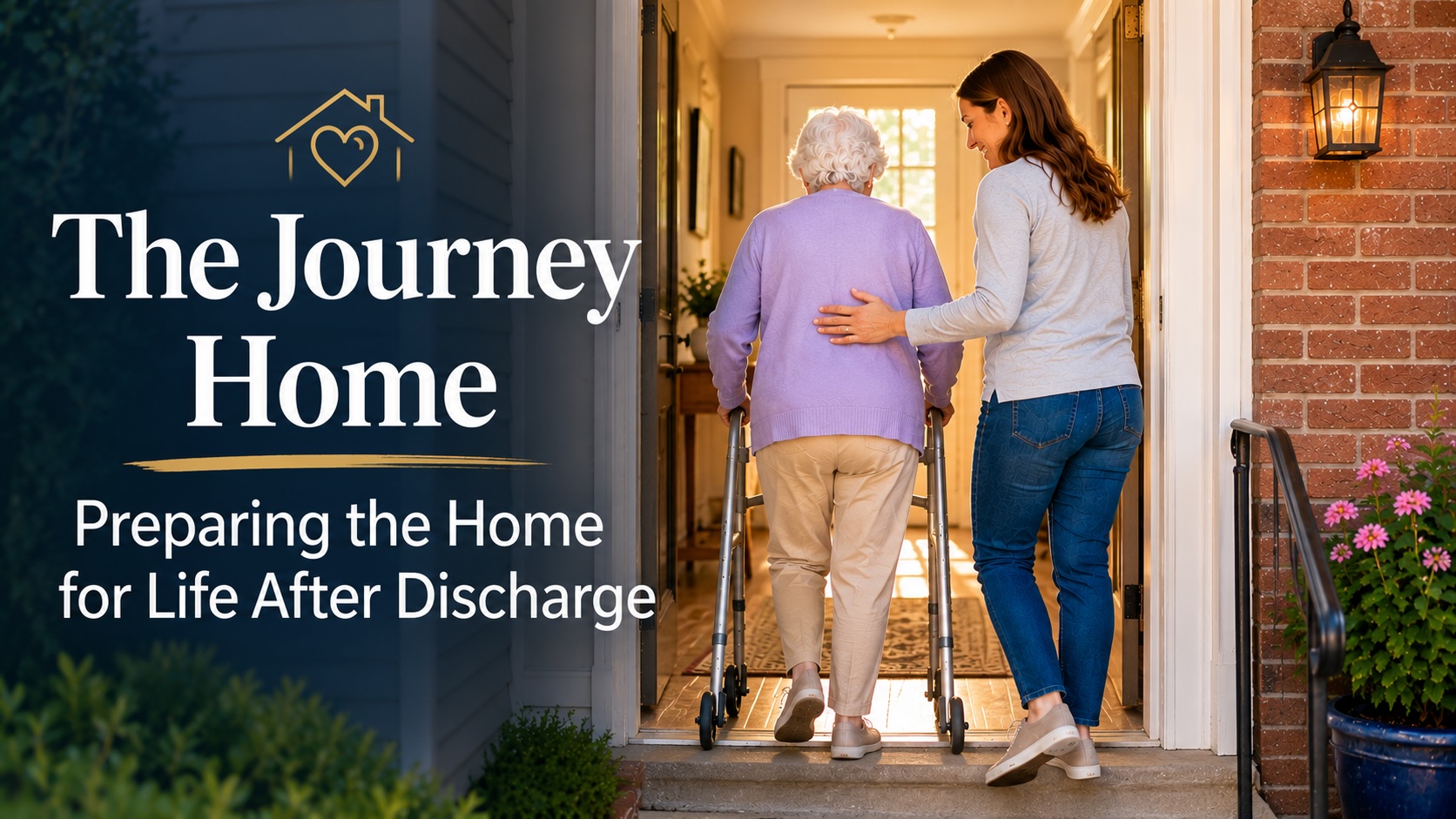
For many families, the journey begins unexpectedly. A fall. A medical emergency. A call to 911. A hospitalization. Time spent in rehab.
After a hospitalization, surgery, or illness, everyday tasks that once seemed simple can suddenly feel overwhelming. Stepping over a tub, navigating a narrow doorway with a walker, or trying to stand safely in a slippery shower can leave people feeling discouraged and dependent on others.
One thing we hear often from families is, “My wife hasn’t been able to shower in weeks,” or “Dad is too afraid to use the bathroom by himself.”
Simple modifications such as grab bars, shower seating, handheld shower heads, and improved access can help individuals regain confidence and return to many of the daily routines they enjoy.
Sometimes the greatest benefit isn’t just preventing a fall, it’s helping someone feel like themselves again.
But before discharge day arrives, it’s important to ask a different question:
Is the home ready?
For some individuals, discharge marks the beginning of recovery. For others, it marks the beginning of a new chapter, one that may include a walker, wheelchair, reduced mobility, or the need for additional support.
Preparing the home before a hospital discharge or rehab discharge can help create a smoother transition while providing greater peace of mind, comfort, safety, and independence for both the individual and their caregivers.
Understand the Discharge Plan Before Returning Home
Before your loved one leaves the hospital, rehabilitation facility, or outpatient surgery center, ask questions and make sure you understand the plan for returning home.
Consider asking:
- Will they be using a walker, wheelchair, or other mobility device?
- Will they need assistance with bathing, dressing, or transferring?
- Have therapists recommended any equipment or home modifications?
- Will they be discharged with Home Health services?
- If so, which disciplines have been ordered: nursing, physical therapy, occupational therapy, or speech therapy?
- Have any home safety concerns been identified by the care team?
- Are there specific recommendations for navigating stairs, bathing, or getting in and out of bed?
Home Accessibility Starts Before You Reach the Front Door
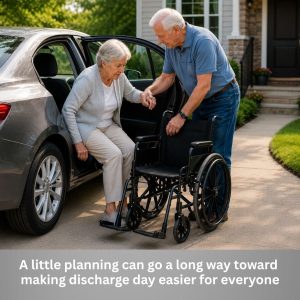
Many families spend time preparing the inside of the home, but overlook the path from the vehicle to the front door. Before discharge, take a walk through the process and identify any potential challenges.
Ask yourself:
- Can they safely get in and out of the vehicle?
- Will they require assistance from a caregiver?
- Will they be using a walker, wheelchair, or transport chair?
- Is there a clear, level path from the driveway to the entrance?
- Are there steps leading into the home?
- Is there a sturdy handrail available?
- Would a wheelchair ramp make entering and exiting the home safer and easier?
For someone returning home with decreased strength, balance concerns, or new mobility equipment, even a single step can become a significant barrier. Therefore, evaluating the entrance ahead of time is essential.
Taking time to evaluate the home’s entrance before discharge can help prevent frustration, reduce fall risks, and create a smoother transition for both the individual and their caregivers.
Check Walker and Wheelchair Accessibility Throughout the Home
One of the most valuable things families can do before discharge is bring a walker or wheelchair home and test it throughout the house. In fact, many families are surprised to discover that a walker barely fits through a bathroom door.
What may have worked well before a hospitalization, fall, or change in mobility may no longer be practical or accessible.
Test Everyday Pathways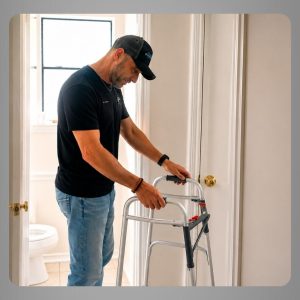
Walk the same routes your loved one will use every day:
- Front door to the bedroom
- Bedroom to the bathroom
- Bathroom to the shower
- Bedroom to the kitchen
- Any commonly used living areas
Evaluate Doorways and Turning Space
As you move through the home, ask yourself:
- Can the walker or wheelchair fit through the doorways?
- Are hallways wide enough to navigate comfortably?
- Are there thresholds that create a tripping hazard or make wheelchair access difficult?
- Is there enough room to turn around in the bathroom?
- Can mobility equipment safely access the areas used most often?
Watch: Common Bathroom Safety Modifications After a Hospital Stay
This video highlights practical bathroom solutions that can make everyday routines easier and more accessible.
Serving Families Throughout Northwest Houston
Most importantly, as a family-owned and operated business, we understand that every family’s situation is different. Budget, caregiver support, home layout, long-term plans, and personal preferences all play a role in the decision-making process. Our goal is not to recommend the most expensive solution; it’s to help create a safer, more accessible home that works for your loved one’s unique circumstances.
Handle with Care Senior Home Safety helps families throughout Tomball, The Woodlands, Spring, Cypress, Magnolia, Conroe, and surrounding communities prepare their homes for safer aging in place.
Whether you’re preparing for a hospital discharge, rehab discharge, or adapting to changing mobility needs, we provide practical solutions designed to improve safety, accessibility, and independence.
Our services include:
-
-
- Home Safety Assessments
- Grab Bar Installation
- Wheelchair Ramps
- Doorway Widening and Swing-Clear Hinges
- Bathroom Safety Modifications
- Walk-In Shower Solutions
- CleanCut® Bathtub Conversions
- Slip-Resistant Floor Solutions
-
Schedule your free Home Safety Assessment today and let us help create a safer path home.
Visit our website: www.handlewithcareseniorhomesafety.com
Frequently Asked Questions
When should I schedule a home safety assessment?
Ideally, the best time is before your loved one is discharged from the hospital or rehabilitation facility. Identifying potential challenges early can help prevent delays, frustration, and safety concerns once they return home.
How do I know if my home is wheelchair accessible?
First, test all primary pathways with a wheelchair before discharge. Pay close attention to doorways, hallways, bathroom entrances, thresholds, and turning radius in key areas of the home.
What are the most common home modifications after a hospital stay?
Typically, the most common recommendations include grab bars, wheelchair ramps, doorway widening, shower seating, handheld shower heads, and slip-resistant flooring.
Why are bathroom modifications so important?
The bathroom is one of the most frequently used and potentially hazardous areas of the home. Therefore, proper modifications can improve safety, reduce caregiver strain, and help individuals maintain independence.
What is aging in place?
Simply put, aging in place means remaining safely and comfortably in your own home as your needs change over time. Home modifications can help make that possible.